Bingo Mood: A Playful Font for Food-Themed Designs
What Is Bingo Mood and Why Does It Stand Out?
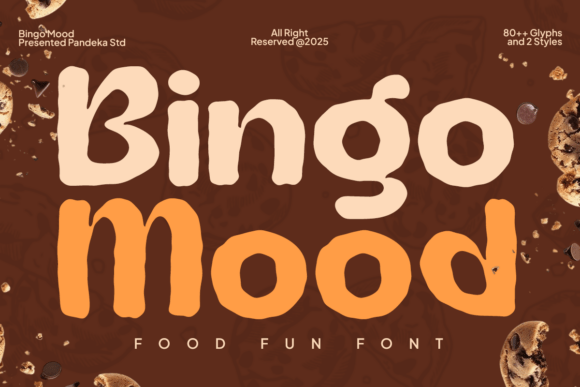
Bingo Mood is a lively and expressive display font designed to evoke the warmth and joy associated with baked goods. Its soft curves and textured variations mimic the look and feel of cookies and pastries, making it a favorite among designers working in the food and beverage industry. Whether you're branding a new bakery or designing social media graphics for a coffee shop, Bingo Mood adds a touch of whimsy and personality that's hard to ignore.
Available in two distinct styles—Regular and Rough—this font gives designers the flexibility to mix smooth and rugged textures. The Regular style offers clean, rounded edges perfect for polished branding, while the Rough version adds a hand-drawn, slightly chaotic charm ideal for casual or vintage aesthetics.
Key Features of Bingo Mood
- Two stylistic variations: Regular and Rough, allowing for creative layering and contrast.
- Warm, friendly appearance: Inspired by soft and crunchy textures found in baked goods.
- Highly legible at large sizes: Best suited for headlines, logos, and short texts.
- Multilingual support: Includes a wide range of characters for international use.
Where Can You Use Bingo Mood?
Bingo Mood shines in environments where a cozy, inviting, and fun tone is essential. It's particularly well-suited for:
- Packaging design: Perfect for dessert boxes, cookie tins, and artisanal product labels.
- Cafe and bakery branding: From logos to menus, Bingo Mood helps create a memorable brand identity.
- Social media content: Eye-catching quotes, promotional posts, and stories benefit from its playful nature.
- Product logos: Especially for children's snacks, ice cream, cupcakes, and other sweet treats.
Because of its bold and decorative style, Bingo Mood works best when used sparingly—typically in titles or short phrases rather than long paragraphs.
Real-World Applications of Bingo Mood
Consider a local bakery launching a new line of seasonal cookies. Using Bingo Mood in their packaging and digital ads instantly communicates the product’s fun and indulgent qualities. Similarly, a small coffee shop might use the Rough style on chalkboard signs to create a cozy, handcrafted feel.
For digital creators, Bingo Mood can be a go-to font for Instagram stories, Pinterest graphics, and YouTube thumbnails related to food content. Its visual appeal helps grab attention in a crowded feed without overwhelming the viewer.
Who Benefits Most from Using Bingo Mood?
Bingo Mood is ideal for:
- Small business owners: Especially those in the food and beverage sector looking to establish a friendly and approachable brand.
- Graphic designers: Who need a versatile font for client projects involving food, desserts, or lifestyle themes.
- Content creators: Influencers and bloggers who want their visuals to stand out with a consistent and cheerful aesthetic.
- Marketing professionals: Crafting campaigns that require a warm, engaging tone to connect with audiences.
How to Evaluate If Bingo Mood Is Right for Your Project
When considering Bingo Mood, ask yourself the following:
- What's the tone of your project? If it's fun, casual, or family-friendly, Bingo Mood could be a great fit.
- What kind of text will you use it for? It works best for short-form content like headlines, titles, and slogans.
- Do you need texture variation? If you're aiming for a layered design, combining Regular and Rough styles can add depth.
- Is readability a concern? While highly legible at larger sizes, Bingo Mood may not be suitable for small print or long-form text.
Strengths and Limitations of Bingo Mood
Like any design tool, Bingo Mood has its strengths and limitations. Understanding these can help you use it more effectively.
Strengths
- Unique personality that instantly elevates food-themed designs.
- Two styles offer flexibility in design projects.
- Excellent for creating emotional connections through visual branding.
- Works well across both print and digital formats.
Limitations
- Not suitable for body text due to its decorative nature.
- May feel too casual for formal or corporate branding.
- Limited character set compared to more traditional fonts.
- May require pairing with a simpler font to maintain balance in complex layouts.
Pairing Bingo Mood with Other Fonts
To create a balanced and professional design, consider pairing Bingo Mood with a clean, sans-serif font like Montserrat, Poppins, or Open Sans. This contrast allows Bingo Mood to shine in headlines while ensuring the supporting text remains easy to read.
For example, a bakery website might use Bingo Mood for the main logo and menu item names, while using a minimalist font for descriptions and pricing information.
Tips for Using Bingo Mood Effectively
- Use it for emphasis: Apply Bingo Mood to highlight key words or phrases rather than entire paragraphs.
- Stick to food-related themes: Its playful and indulgent look is most effective in contexts that match its personality.
- Experiment with texture: Combine Regular and Rough versions to create visual interest in posters or packaging.
- Test legibility: Always preview your text at different sizes to ensure it remains readable.
- Check licensing: Make sure you have the appropriate license for your intended use, especially for commercial projects.
Final Thoughts on Bingo Mood
Bingo Mood is more than just a font—it's a design tool that brings warmth, happiness, and flavor to your creative work. Whether you're launching a new brand or refreshing your visual content, it offers a unique blend of charm and versatility that's hard to find in other typefaces.
By understanding its features, strengths, and limitations, you can make the most of Bingo Mood in your next design project. Remember, the goal is to enhance your message—not overshadow it. When used thoughtfully, Bingo Mood can help your brand stand out in a crowded market and connect with your audience on an emotional level.
If you're looking to add a touch of sweetness to your designs, consider giving Bingo Mood a try. It might just be the missing ingredient your project needs.