Smiling Thinker: A Dynamic Display Font for Bold Visual Statements
When it comes to typography that commands attention, Smiling Thinker stands out as a distinctive choice for designers seeking to inject personality and edge into their work. This display font, rooted in the energy of street art and urban culture, offers a hand-crafted aesthetic that feels both spontaneous and intentional. Unlike mass-produced typefaces that prioritize uniformity, Smiling Thinker embraces imperfection and character, making it a compelling option for projects that demand visual impact and authenticity.
Understanding the Design Language of Smiling Thinker
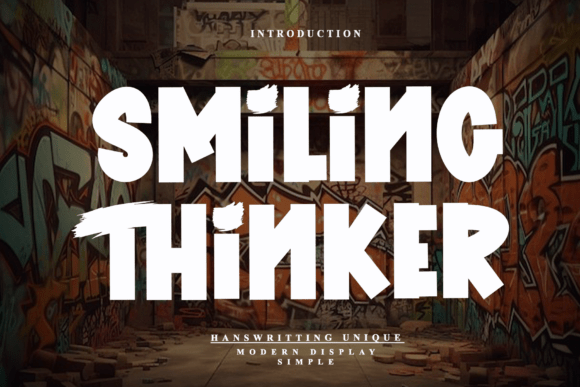
At its core, Smiling Thinker is defined by its sharp angles, brush-style cuts, and an overall raw finish that mimics the spontaneity of graffiti and hand-painted signage. These design elements contribute to a font that feels alive—each letterform carries a sense of motion and attitude. The typeface’s structure avoids the sterile precision of digital fonts, instead opting for a more expressive and tactile quality that resonates with audiences looking for something unconventional.
Its visual energy makes it particularly effective in environments where standing out is essential. Whether used for branding, packaging, or event posters, Smiling Thinker introduces a level of visual intrigue that more traditional fonts may not achieve. Designers who value originality and seek to communicate boldness will find this font to be a valuable asset in their toolkit.
Practical Applications and Target Audiences
Smiling Thinker excels in contexts where visual impact is more important than readability at small sizes. It’s best suited for short-form text such as headlines, logos, album covers, and promotional materials. Streetwear brands, music labels, and creative collectives that want to project a rebellious or avant-garde image often find this font aligns well with their brand identity.
- Poster design: Its high-impact look makes it ideal for gig posters, urban art exhibitions, and alternative lifestyle events.
- Brand identity: Streetwear labels and niche product packaging benefit from its expressive character.
- Editorial design: Used sparingly, it adds visual punch to magazine covers or special features.
That said, Smiling Thinker is not intended for long-form body copy or user interface design. Its stylistic flourishes can make extended reading difficult, so it’s best reserved for applications where the message is short and the visual impression is paramount.
Performance in Real-World Use
In practical terms, Smiling Thinker delivers a strong visual presence when used appropriately. Designers who have incorporated it into branding projects note that it communicates a sense of confidence and individuality. One streetwear brand reported that their logo redesign using Smiling Thinker led to a noticeable increase in social media engagement, particularly among younger audiences who responded positively to the font’s urban, rebellious tone.
From a technical standpoint, the font is well-structured and includes standard character sets that support most Western European languages. Kerning and spacing are consistent enough for display use, though fine-tuning may be necessary depending on the application. It performs reliably across both print and digital formats, though screen rendering at very small sizes is not recommended.
Quality and Usability Considerations
One of the strengths of Smiling Thinker lies in its authenticity. The hand-drawn nature of the font gives it a unique texture that digital fonts often lack. However, this also means that consistency across characters can vary slightly—a feature that may be seen as a benefit or a drawback depending on the designer’s preference.
For usability, the font includes both uppercase and lowercase letters, though the lowercase forms are less frequently used due to the font’s stylistic emphasis. Numerals and punctuation are included but are minimalistic in design, which maintains the font’s overall aesthetic but may limit its flexibility in certain design contexts.
Flexibility and Long-Term Value
While Smiling Thinker is not a font that can be used universally across all design applications, its niche appeal is precisely what gives it long-term value. As trends in branding and design continue to embrace authenticity and hand-crafted visuals, fonts like Smiling Thinker remain relevant. Its distinctiveness ensures that it won’t be lost in a sea of generic display fonts, making it a worthwhile investment for creatives who want to differentiate their work.
Designers should consider pairing Smiling Thinker with simpler, more legible fonts to create visual hierarchy. For example, using it for a headline over a clean sans-serif body text can balance its boldness with readability. This approach allows the font to shine without compromising the overall communication of the message.
Who Should Consider Smiling Thinker?
Smiling Thinker is best suited for designers, brand strategists, and creatives who work within urban culture, music, fashion, or alternative lifestyle niches. It’s particularly valuable for those who want to convey a sense of rebellion, individuality, or artistic flair through typography.
Entrepreneurs launching streetwear lines, event promoters designing posters, or independent musicians creating album art may find that Smiling Thinker enhances their visual storytelling. It’s also a strong option for educators or content creators looking to make engaging, visually dynamic presentations or social media assets.
However, corporate brands or designers working on formal communications should approach with caution. The font’s edgy character may not align with more conservative or professional aesthetics. It’s important to evaluate whether the tone of the font matches the intended message and audience perception.
Final Thoughts and Recommendations
Smiling Thinker is not a font for every project, but when used thoughtfully, it can elevate a design from ordinary to memorable. Its raw, expressive quality makes it a standout choice for creatives who want to push boundaries and embrace a more tactile aesthetic in their work. Designers should test the font in different contexts before committing, especially considering its stylistic nature and readability limitations.
If your goal is to create bold, attention-grabbing visuals that reflect individuality and creative energy, Smiling Thinker is worth exploring. Like any expressive typeface, it works best when used with intention and paired with complementary design elements that allow it to shine without overwhelming the overall composition.